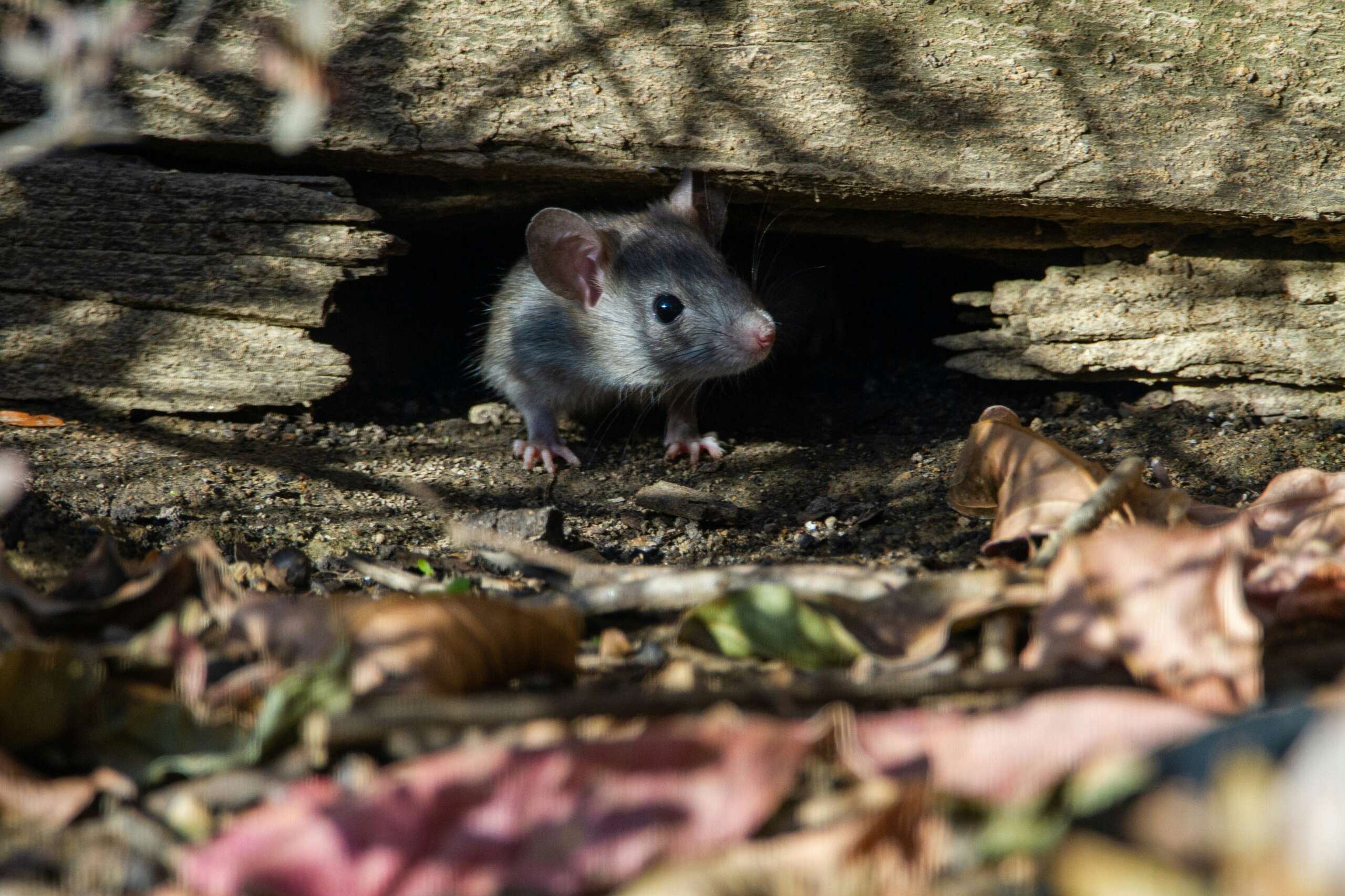

Roof rats and house mice look similar at a glance, but size and location usually give them away. A roof rat runs 13 to 18 inches from nose to tail with a long, hairless tail, while a house mouse tops out around 7 inches including its shorter, thin tail. Roof rats climb and nest up high, in attics, roof spaces, and dense trees, while house mice stay lower, in the spaces inside walls, cabinets, and garages. Droppings tell a similar story: roof rat droppings run larger and spindle-shaped, while mouse droppings stay small and rod-shaped with pointed ends.
Roof Rat or House Mouse?
If you’re trying to sort out a roof rat vs house mouse situation in your attic or garage, size and location will tell you faster than almost anything else. Both show up more in Tucson once fall cools the nights down, and both get lumped together as “rats” or “mice” by homeowners who never get a clear look at the animal itself.
The mix-up is understandable. Neither species holds still long enough for a good look, and most people only find the evidence they left behind. Once you know what separates them, though, the droppings, the noise, and even the damage start pointing to one or the other pretty quickly.
Why Telling Them Apart Matters
A roof rat problem and a house mouse problem do not get solved the same way. Roof rats travel along power lines, palm trees, and roof edges, so the fix usually starts where the roof meets the walls and at the attic vents.
House mice work closer to the ground, slipping in through gaps at the foundation or under doors. Sealing off entry points for a mouse problem focuses on a completely different part of the house than it does for a roof rat problem.
Guessing wrong wastes time. Sealing a foundation gap does nothing for a roof rat colony living in the attic, and checking the attic does nothing for a mouse working its way in through the garage.
Roof Rat vs. House Mouse: Size and Look
A side-by-side look clears up most of the confusion fast.
- A roof rat measures 13 to 18 inches nose to tail; a house mouse rarely tops 7 inches
- Roof rats carry a long, scaly, hairless tail, while a mouse’s tail is thin and often furred
- If the ears look oversized for the head, that usually points to a mouse rather than a rat
- Roof rat fur runs dark brown to black on top with a lighter gray belly, while house mice tend toward light brown or gray all over
Where Each One Nests
Roof rats earn their name honestly. They climb, and they prefer height, so attics, roof spaces, palm trees, and dense citrus or ornamental trees near the house are where a Tucson infestation usually starts. A roof rat rarely bothers with a ground-level burrow when a warm attic space sits right above it.
House mice stay lower almost every time. The usual spots are the spaces inside walls, the gap under the cabinets, or a stack of stored boxes in the garage. A mouse nest tends to be within a short distance of both a food source and a quiet hiding place. Neither animal nests in the open, so finding the nest itself is rare; finding the signs around it is not.
Reading the Droppings
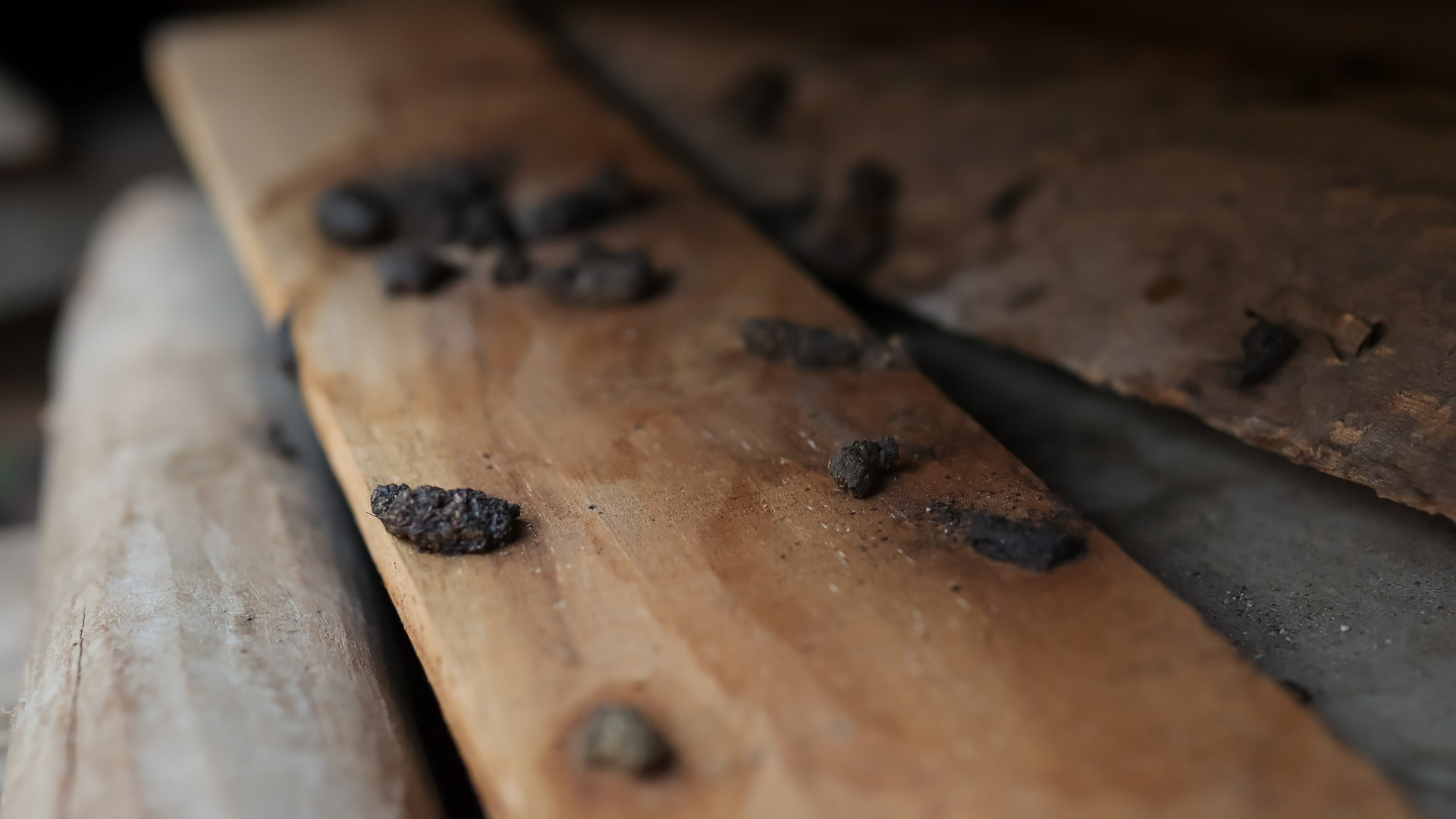
Droppings are usually the fastest way to confirm which rodent has moved in, since the animals themselves stay hidden most of the day.
- Roof rat droppings run about half an inch long, close to the size of a raisin, with pointed, spindle-shaped ends
- Mouse droppings measure roughly a quarter inch and look more like small, dark grains of rice
A couple of other clues apply no matter which rodent left them: fresh droppings look moist and dark while older ones dry out and turn a chalky gray, and a cluster in one spot usually marks a regular travel path or feeding area rather than a single passerby.
Scratching sounds add another clue. Roof rats tend to be heard overhead, in the ceiling or attic, while mice more often turn up inside walls at roughly floor or counter height.
Which One Causes More Damage
Both animals chew, but they don’t chew the same things in the same places. Roof rats gnaw through the wood under the roof, roof trim boards, and irrigation lines they cross while climbing. Citrus growers around Tucson regularly find fruit damaged on the tree well before it ripens.
House mice do their damage lower down: chewed wiring behind an appliance, shredded insulation inside a wall, or a hole gnawed straight through a cardboard box of stored linens.
The financial risk is higher with roof rats in most cases, because attic wiring and roof structure are more expensive to fix than a chewed box of holiday decorations. That said, a house mouse problem left alone for a full season can do plenty of its own damage, especially once a second or third litter joins the first.
What To Do Once You Know Which One It Is
Once you have a decent guess at which rodent you’re dealing with, our pest control team can confirm it and build the right plan around it rather than a generic one.
Roof rat cases usually involve attic work and start at the roof edge; house mouse cases usually start at the foundation and garage. Either way, guesswork stops being useful the moment droppings, noise, or chewed material show up.
Our upcoming rodent control program is built around exactly this kind of species-specific approach: identify what’s in the house, then treat the entry points and nesting areas that the species relies on, rather than applying the same fix to every call.
Fall is when both roof rats and house mice start testing Tucson homes for a way in, and telling them apart early saves a lot of wasted effort chasing the wrong fix. If you’ve spotted droppings, heard scratching, or found chewed material and want a straight answer on which rodent it is, call (520) 393-3352 to get a technician out to confirm it and start on the right plan the first time.
We proudly serve:
- Tucson
- Oro Valley
- Marana
- Sahuarita
- Vail
- Green Valley
- Sierra Vista
- Benson