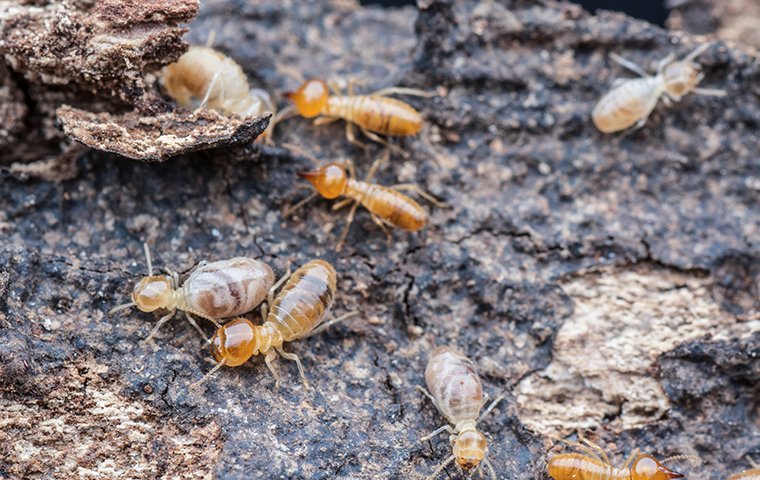
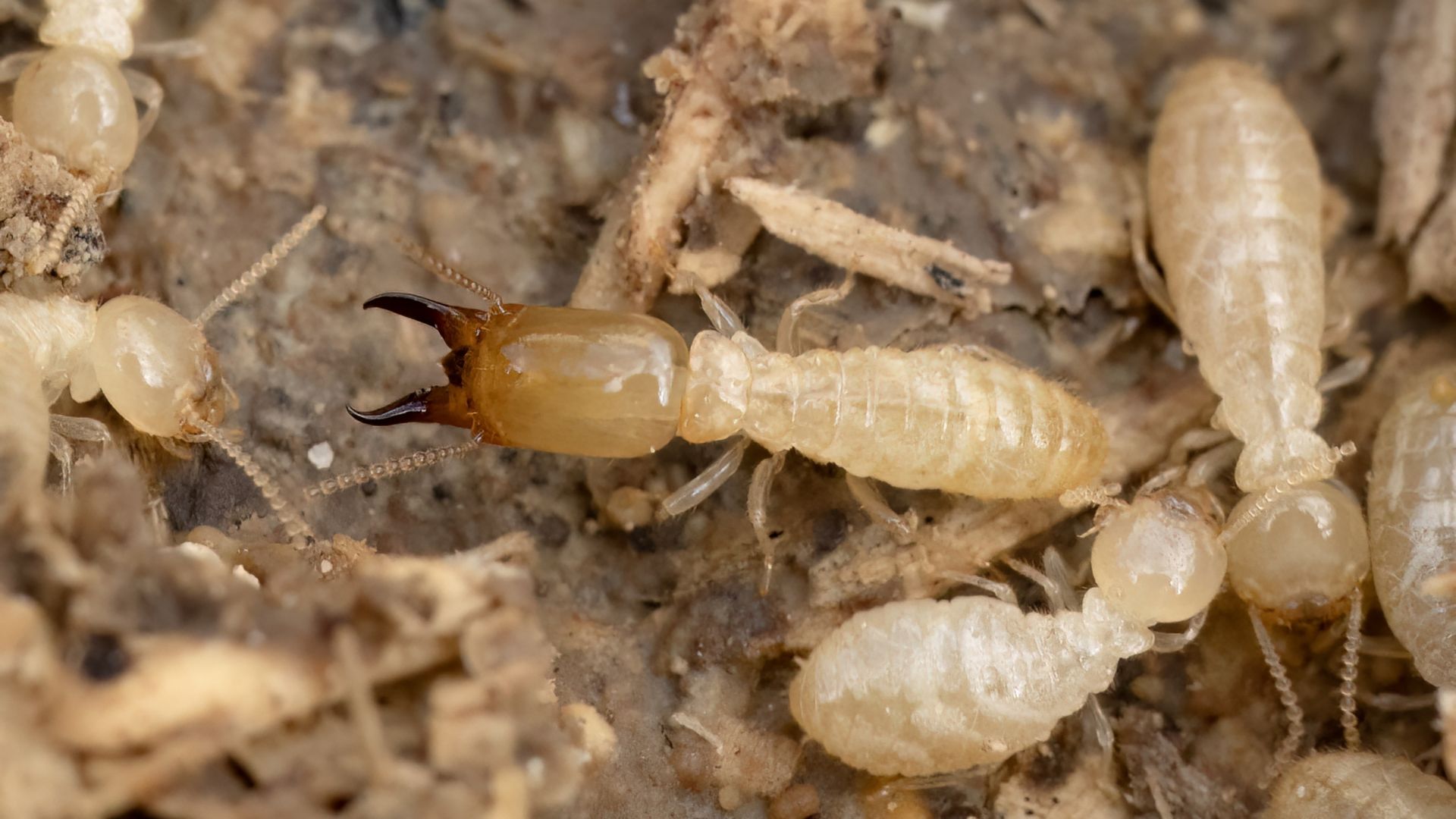

Termite season in Tucson does not announce itself with a knock on the door. It shows up as a small pile of wings on a windowsill, a mud tube along the garage baseboard you almost missed, or a door that suddenly sticks in March when it never did before. By the time any of those things appear, a colony has usually been working inside your walls for months.
This guide covers what those early signals actually mean, when Tucson’s swarm season runs and why it starts earlier than most people expect, and how termite control in Tucson AZ works from inspection through treatment.
Signs of Termite Damage
Termite damage is slow, quiet, and almost entirely out of view until it’s not. Most Tucson homeowners who call us after finding damage are surprised to learn the timeline involved. A colony does not need to be ancient to cause real structural harm; it just needs to go unnoticed long enough.
Subterranean vs. Drywood
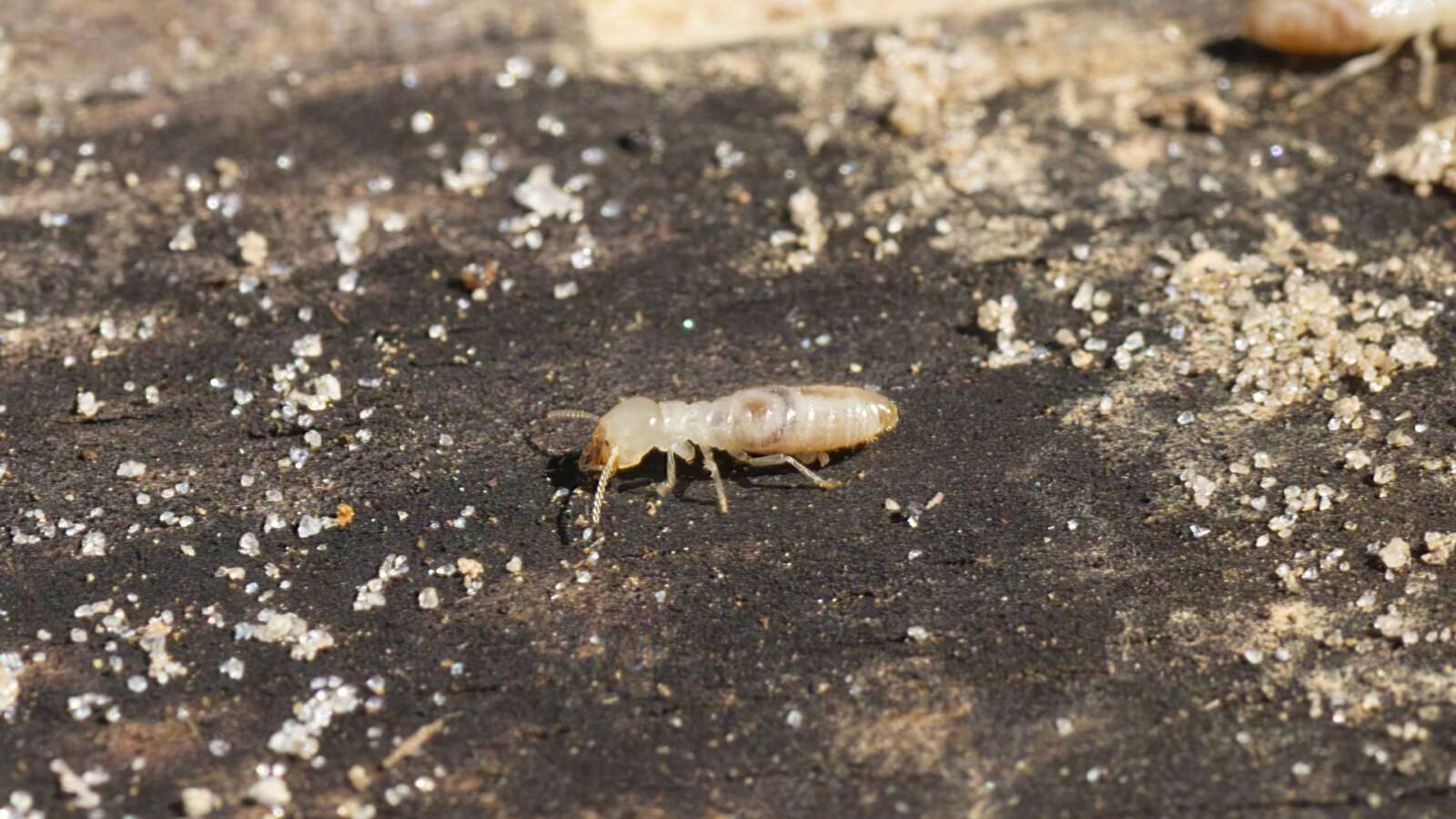
Subterranean and drywood termites attack homes differently, and knowing which one you have changes everything about how you treat it. Subterranean termites live underground and commute. They build the mud tubes you see on foundation walls and stem walls because they cannot survive exposure to open air on the way to their food source. Those tubes are transit infrastructure, not the colony itself. The colony is in the soil, sometimes ten feet or more from where the damage is happening.
Drywood termites skip the soil entirely. They nest inside the wood they’re eating, which means a drywood infestation can exist in an attic beam or a piece of door framing with no external sign beyond small exit holes and piles of frass. Frass looks like very fine sawdust or a scattering of tiny pellets, often the same color as the surrounding wood. It shows up near baseboards, on window ledges, and in attic corners.
Other things worth looking for in and around your home:
- Mud tubes on the foundation, exterior stem walls, or inside the garage
- Hollow-sounding wood when you knock on baseboards or door framing
- Doors or windows that fit fine all winter and suddenly drag or stick
- Frass deposits, particularly near wood trim, in the attic, or along window frames
Tucson Termite Swarm Season
Swarmers are not the termites doing the damage. They’re the reproductive caste, built specifically to leave the colony, pair off, and start new ones. A swarm is the colony advertising that it’s large enough and mature enough to expand. In Tucson, that event happens on a schedule most homeowners are not prepared for.
When Termites Are Most Active in Arizona
Tucson’s subterranean termites typically begin swarming in late February, well before spring officially arrives, and activity peaks through April and May as soil temperatures climb. According to the University of Arizona Cooperative Extension, the warm, dry conditions of the Sonoran Desert accelerate colony development compared to termite populations in cooler or wetter climates, which is part of why Tucson sees sustained swarm activity across several months rather than a single short window.
A swarm itself lasts about thirty minutes. The swarmers that land on your property and successfully pair off are starting new colonies in the soil near your foundation. If swarmers are appearing inside your home, that is a more urgent signal: the colony generating them is already inside the structure, not just nearby.
Drywood termites run on a different clock. They tend to swarm from late summer into fall, often triggered by heat spikes or the first monsoon moisture. A home can have both species active in different areas at the same time, which is one reason a thorough inspection covers the full structure rather than just the spots where something was noticed.
Our Termite Inspection Process
An inspection for termite control in Tucson AZ is not a quick walkthrough. We are working through a systematic checklist of the places termites access, travel through, and hide: foundation perimeter, slab penetrations, crawlspace framing, garage wall framing, attic, and interior spaces where wood-to-soil contact or moisture issues create vulnerability.
What Our Termite Inspectors Look For
Beyond the obvious signs, our inspectors pay particular attention to areas that homeowners rarely check: the interior framing of the garage, the wall cavities near plumbing penetrations, and expansion joints in the slab where subterranean termites commonly exploit the gap between concrete sections.
Moisture history matters too. Wood that has been wetted repeatedly, from a leaking pipe, a slow roof intrusion, or irrigation runoff against the foundation, is far more attractive to both termite species than dry wood.
What a full termite inspection in Tucson AZ covers:
- Active and inactive mud tubes across the full foundation perimeter and interior framing
- Frass evidence in the attic, near baseboards, and around window and door framing
- Probing of accessible wood for soft spots or hollow sections in high-risk areas
- Moisture and conducive conditions: wood-to-soil contact, mulch against the foundation, drainage problems
After we finish, you get a direct conversation about what we found, not a printed form handed over without context. If there is no active infestation, we say so clearly. If there is, we explain exactly where, what species, and what treatment makes sense for your specific situation.
Termite Treatment in Tucson
Treating termites without knowing which species you have is a good way to spend money on the wrong approach. The two primary species in Tucson require completely different methods, and a treatment designed for subterranean activity does nothing for a drywood colony living inside an attic beam.
Drywood Termite Extermination
For drywood termites, treatment targets the specific wood members where the colony is nesting. If activity is localized, we use direct injection treatments that introduce termiticide into the galleries where workers are active. When infestations are more dispersed through the structure, a whole-home approach may be warranted. Either way, the goal is eliminating the colony at its nesting site, not just reducing surface activity.
Subterranean treatment works from the outside in. We apply liquid termiticide in a continuous treated zone around the foundation perimeter, in key entry points, and at any conducive conditions we identified during inspection. That barrier kills workers returning to the colony through treated soil and blocks new access to the structure.
As we cover in more detail on our termite service page, a barrier with gaps is a barrier that fails. Coverage has to be complete.
If you want to understand what the damage can look like before and after treatment, our post on spotting Arizona termite damage covers the visual indicators in detail. For a broader look at what Tucson homeowners are actually dealing with, the truth about termites in Arizona is that no active infestation gets smaller on its own.
Our pest control services are built around what Tucson homes actually face, not a national template applied to a desert market.
Get Termite Control with Green Shield Pest Control
Swarm season is the best time to act on termite concerns because it’s when activity becomes visible. Once the swarmers disappear, the problem does not go away; it just goes quiet again.
If you have seen anything that looks like termite activity this spring, or if you have not had your home inspected in a few years and want to know what is actually going on in your walls, call Green Shield Pest Control to schedule.
You can reach us directly through the contact us page on the Green Shield website. We serve Tucson homeowners across residential and commercial properties throughout the area.