
A pile of wings on a windowsill in March could be from either one. Carpenter ants and termites swarm in Tucson around the same time of year, they both damage wood, and they both look enough alike at first glance to get mistaken for each other regularly. The catch is that the treatment for one does nothing for the other. Getting the identification right is the whole job. This guide covers how to tell the two apart by looking at the insect, how their damage differs once it’s in your wood, and how to narrow down what you’re dealing with before you call for carpenter ant control or termite treatment.
What Each Pest Looks Like
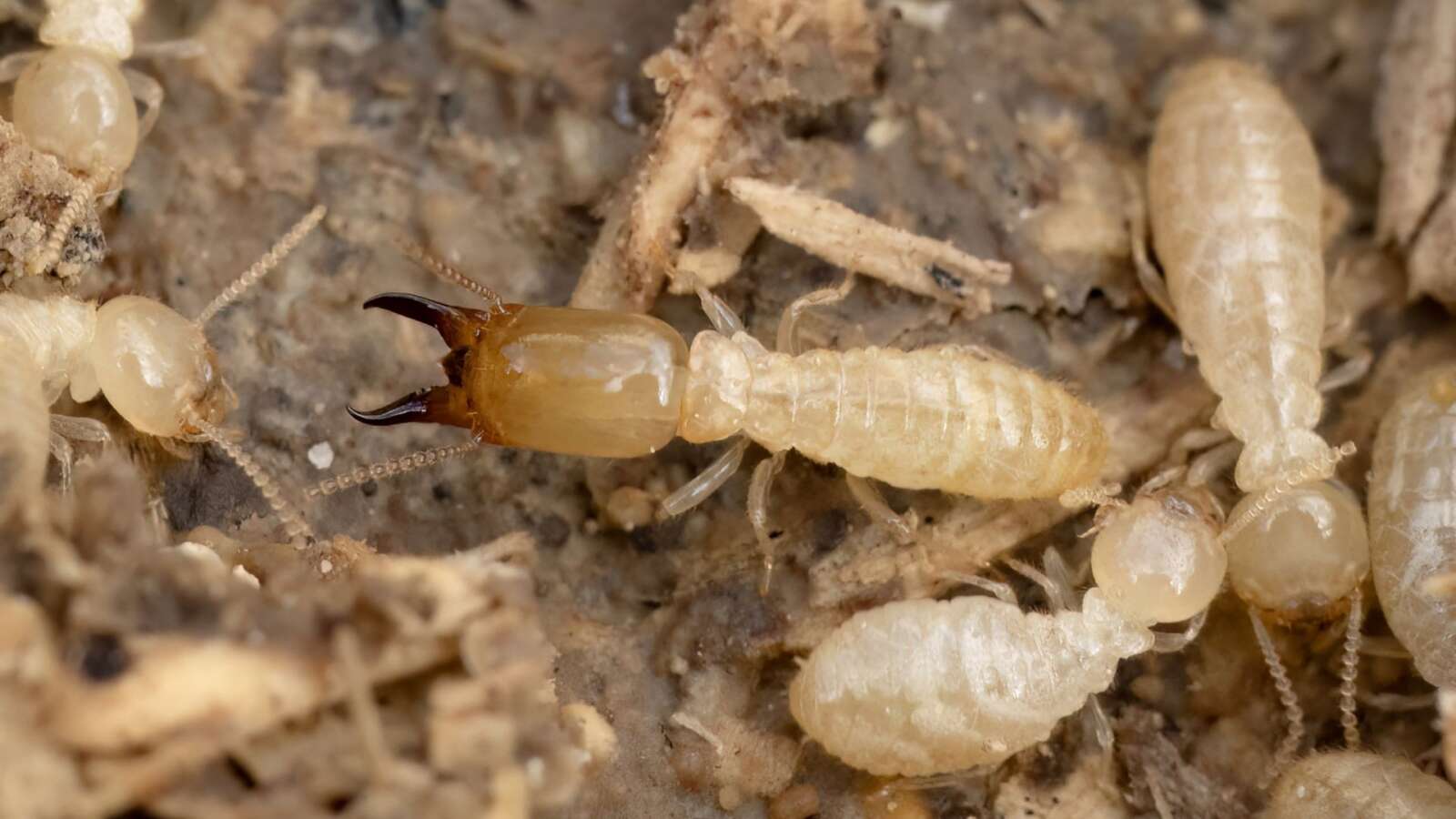
The two species look nothing alike when you see them side by side. The problem is that nobody ever sees them side by side. What you get is a glimpse of one insect on a countertop or a wall, briefly, in dim lighting. That’s usually enough if you know the three features to check. Carpenter ants are big, dark, narrow-waisted ants with bent antennae. Termite workers are pale, almost see-through, with straight antennae and no waist at all. A termite worker basically looks like a short grain of rice with legs, where a carpenter ant looks like a much larger version of the ants you see on the sidewalk.
Flying Ants vs. Termite Swarmers
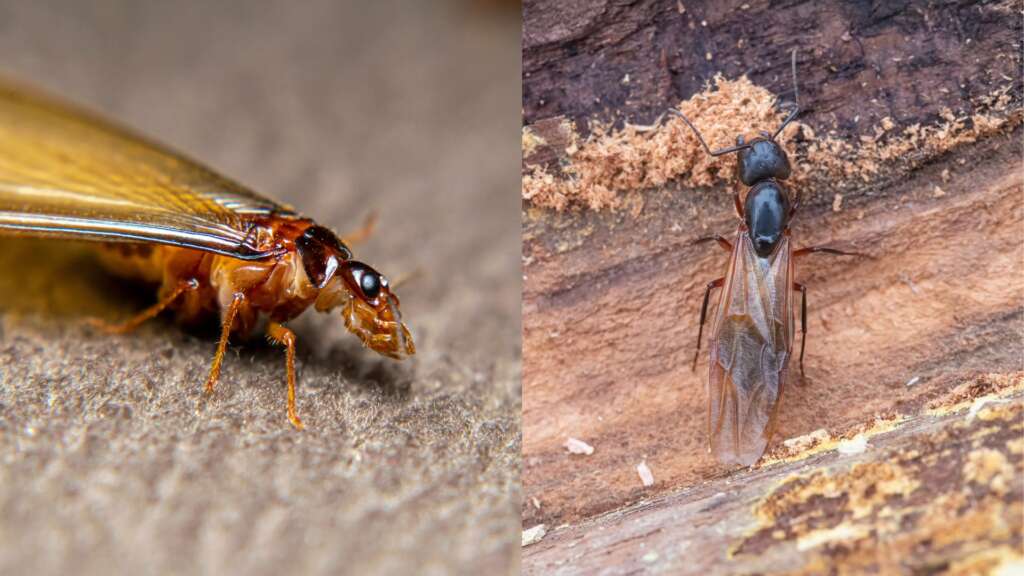
The confusing stage is when both species produce winged reproductives in spring. A flying carpenter ant and a termite alate genuinely look similar at a quick glance, but three features separate them. Carpenter ant wings are unequal, with the front pair longer than the rear, where a termite’s four wings are all the same size. Carpenter ant antennae bend at a joint; termite antennae run straight out from the head. And the waist is the giveaway: a pinched middle means ant, a uniform rectangle front-to-back means termite. Any one of those three tells is enough. Carpenter ants are one of several species that regularly turn up in Tucson homes, and the treatment varies by species more than most homeowners realize.
Carpenter Ant Damage vs. Termite Damage
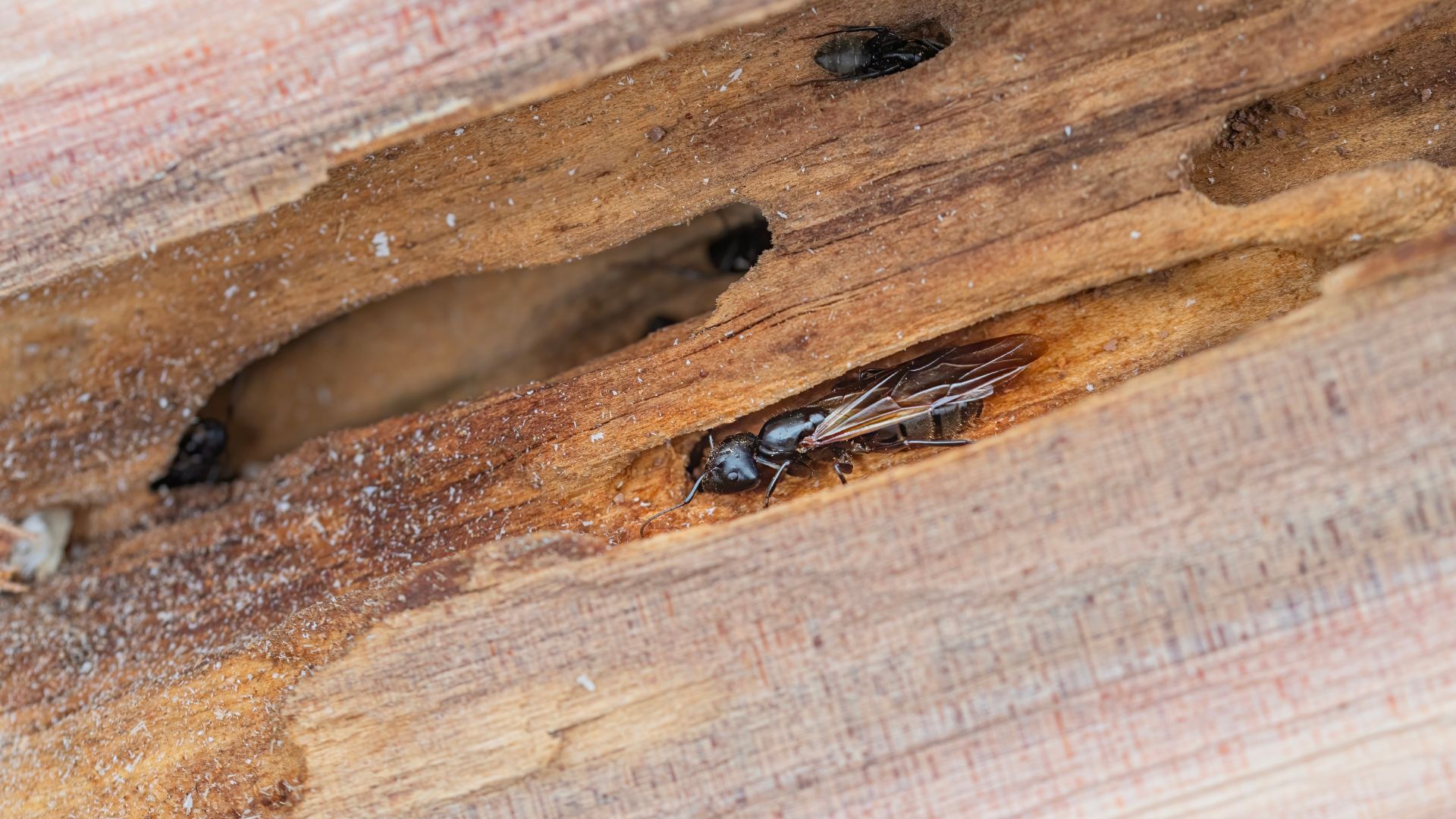
Here’s the core difference. Carpenter ants don’t eat wood; they just live in it. Termites digest it. That single fact explains most of what the damage looks like once you find it. Termite galleries follow the wood grain and get packed with soil or chewed pulp as the colony works. Carpenter ant galleries are the opposite. Workers haul debris out as they go, so the tunnels end up looking sanded smooth. If you can get a look inside a damaged stud and the interior is clean and polished, you’re looking at ant work. If it’s caked with grit, that’s termites. Those subterranean and drywood patterns show up across most of Southern Arizona, with regional differences in which species hits which kind of wood first.
How to Spot the Difference
Looking at the wood usually tells you faster than looking at the insect. A few cues worth knowing:
- Check the debris underneath. Termite frass is fine and pellet-like; carpenter ant sawdust often has insect parts mixed in.
- Pry open a gallery if you can. Clean and sanded-smooth means ants. Packed with soil or pulp means termites.
- Note where the damage is. Ants prefer wood that’s already damp or rotting, and both termite species work dry or wet depending on the type.
- Put an ear to the wall at night. A large carpenter ant colony can sometimes be heard from inside the framing.
How to Identify Carpenter Ants
Carpenter ants are easier to catch in the act than termites because the workers show themselves out in the open. You’ll see them foraging across a kitchen counter at dusk, and the ones worth paying attention to are noticeably bigger than the small sidewalk ants most Tucson homes get. Termites never announce themselves that way. If you’re seeing that kind of ant activity, and you’re also finding sawdust piles in the garage or attic, you’re looking at a working carpenter ant colony. Termites leave a very different trail in the framing, which is why the two rarely get mistaken once you’ve seen both in person.
Signs You Have Carpenter Ants
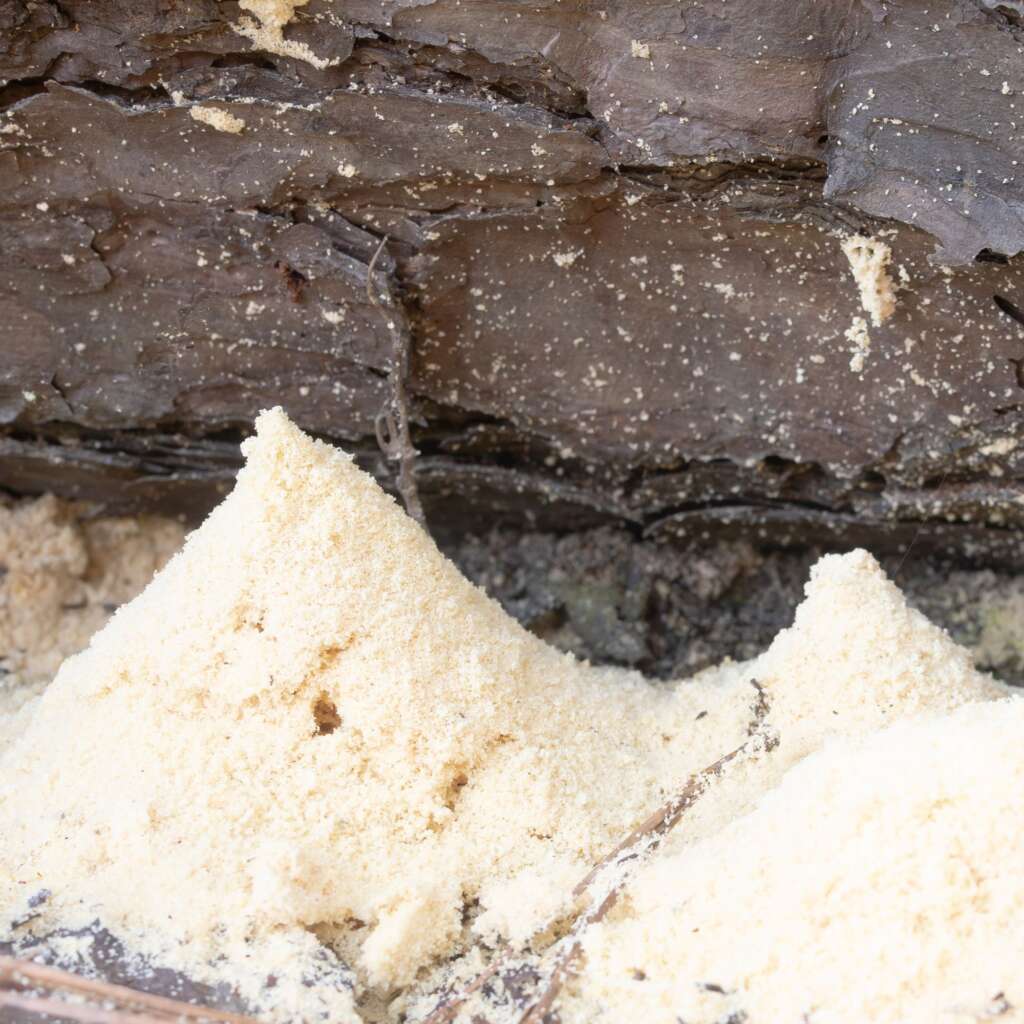
The pattern worth watching for is more than a single sighting. If you’re seeing carpenter ants forage across the kitchen at night, a colony is probably nested near a water source somewhere in the house. A leaking pipe or a cabinet with plumbing behind it are the most common candidates. Sawdust piles below baseboards or in the attic are another sign, and they usually mean the colony has been working for a while. A big colony inside a wall is sometimes audible if the house is quiet enough at night, a faint rustling that most people mistake for something else entirely.
Signals that point to carpenter ants rather than termites:
- Large dark ants foraging on counters, walls, or exterior siding after dark
- Sawdust piles showing up below baseboards, window frames, or attic penetrations
- A faint rustling from inside a wall at night when the house is otherwise quiet
- Wood that’s been wet at some point (plumbing leaks, old roof intrusion) near the active area
Which Pest Do You Actually Have?
Before calling for treatment, narrow it down by eye. Clean, polished tunnels in damaged wood point to carpenter ants. Tunnels packed with debris point to termites. Mud tubes on a foundation wall are conclusive for subterranean termites, because ants don’t build them. If all you’ve got is a single bug with no visible damage to look at yet, go back to the body features: wings, antennae, waist. Between the wood check and the body check, most homeowners can get to the right answer on their own before we show up.
When to Call a Professional
Guesswork gets expensive when the wrong treatment gets applied. The two pests need completely different approaches, and throwing generic insecticide at the problem won’t touch either. Call us when the identification isn’t obvious, when you can see damage but can’t locate the source, or when activity in the house has clearly moved past a few scattered sightings. We handle both sides of this problem under one roof, with dedicated termite treatment for cases where that’s what the inspection turns up.
Get Pest Control – GreenShield
Both pests get worse the longer they’re left alone. Treatment depends on knowing which one you’re dealing with, so the first step is always identification. If something is crawling, swarming, or chewing in your house and you can’t pin down what it is, call us at (520) 393-3352. You can also send us a message online if it’s already after hours. We cover the greater Tucson area across Pima County and into Cochise County.
Service areas:
- Benson, AZ
- Marana, AZ
- Tucson, AZ
- Sahuarita, AZ
- Oro Valley, AZ
- Vail, AZ
- Green Valley, AZ
- Sierra Vista, AZ