

Crickets come inside when the ground outside stops holding heat overnight. In Tucson, that shift lands in October, and the crickets that spent the summer under mulch and along block walls start moving toward the warm air leaking from a garage door or the gap under an exterior door. Once inside, they head for moisture, so the laundry room and the cabinet under the kitchen sink are the usual spots. Finding one or two usually means the population outside is high and your house has an easy way in. Closing the way in does more for you than killing the ones already indoors.
Nobody notices the first cricket. They notice the chirping at 11 pm from somewhere behind the water heater, and then again the next night. In a Tucson October, the days can still run warm while the ground gives up its heat after dark, and that temperature swing is what drives them indoors.
Crickets are cold-blooded and follow warmth, so your concrete slab and the warm walls around your garage look more appealing to them than the dirt they’ve been living in since July.
What Changes for Crickets in October
Through the summer, there’s no reason for a cricket to come near your house. Monsoon rain keeps the soil damp, and there’s plenty to eat out there. The ground holds its heat all night too. By October that’s over. Overnight lows drop into the fifties, the desert dries back out, and the vegetation that came up in August starts to die off.
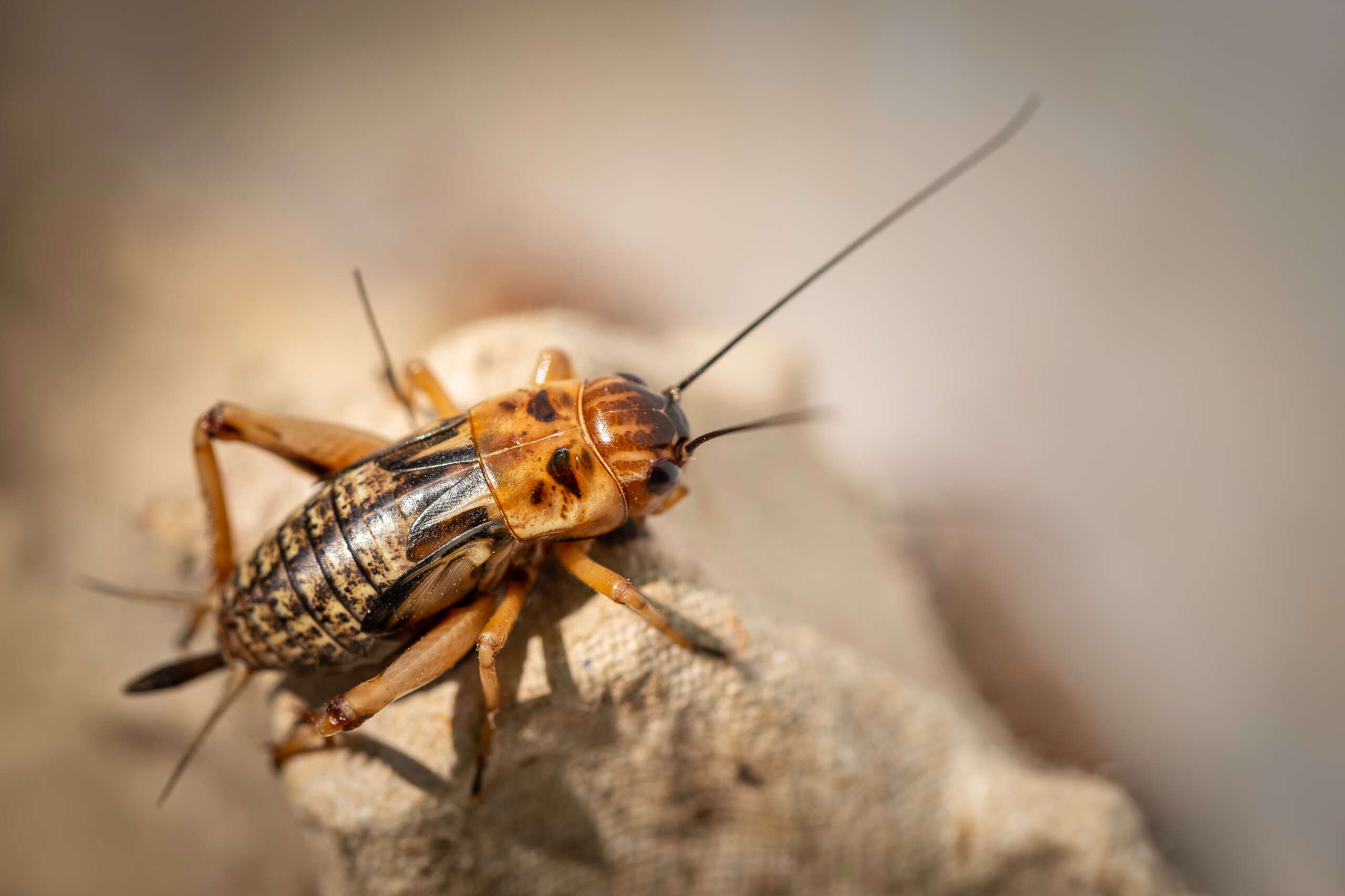
Two things happen at once. The food outside gets thinner, the warm ground disappears, and both push crickets toward buildings. Most of the ones that get inside are field crickets, dark brown or black and about an inch long. You may also run into a Jerusalem cricket out here, the big pale humpbacked one that locals call a niño de la tierra. Those live underground and turn up in garages after rain rather than inside the house.
How bad October gets depends a lot on what August looked like. A wet monsoon means green growth and a lot of surviving young, and that population is still out there in October with nowhere good left to go. After a dry summer, you’ll see far fewer. It’s one of the more predictable pest patterns in southern Arizona.
Irrigation matters too, which is why two neighbors on the same street can have completely different Octobers depending on how their sprinklers and drip lines are set up.
Where Crickets Show Up Inside First
Garages take the worst of it. The gap under a garage door is often the biggest opening in a Tucson home; it sits right at ground level, and the concrete behind it holds heat well into the night. Crickets in garages usually get in that way and then spread inward through the door to the laundry room.
After that, look where it’s damp and dark:
- Under the kitchen sink, behind the plumbing
- Water heater closets, especially the ones off an exterior wall
- Laundry room floors along the baseboard, where the drip from a washer hookup is enough to hold them
- Bathrooms, especially around the tub and toilet base where the floor stays damp
If you keep finding them in one room and nowhere else, that room has either the moisture or the entry point, and usually both.
Why the Chirping Gets Louder at Night
Only the males chirp, and they do it by rubbing their wings together to call females. Cooler air slows the rhythm down, so October chirping runs slower than the fast summer calling you hear along a wash in August.
Crickets call mostly after dark, and a quiet house at night gives the sound nothing to compete with. A cricket tucked into a space inside a wall or behind an appliance is sitting in a hard-surfaced box, and the sound bounces off. It also stops the second you walk into the room, so people spend twenty minutes hunting one down and never find it. Wait quietly in the doorway for a minute, and it will usually start up again and give itself away.
What Attracts Crickets Indoors
Lighting is the one most people miss. Many field crickets can fly, and they’re drawn to bright white light at night. A porch light or other wall-mounted light right beside a door collects them against the wall for hours, and from there it’s a short walk under the door. Moving that light away from the door, or switching to a warmer amber bulb, cuts down how many gather there.
Then it’s water and cover. Drip irrigation running at dusk and an air conditioner drain line dumping next to the house both leave a damp strip right where you least want one. Add mulch beds piled against the stucco wall, or lantana and rosemary grown up tight to the block, and crickets gather exactly where your entry points are.
How to Get Rid of Crickets in the House
Vacuum up the ones you find; it’s faster than spraying, and you won’t leave anything behind in a cabinet. Then work on the gaps, because that’s the part that lasts:
- Replace the garage door bottom seal if daylight shows under it anywhere
- Fit new seals around exterior doors, including the door from the garage into the house
- Screen or seal the dryer vent, the spots where AC lines pass through the wall, and any open weep holes (the small drainage gaps in a block wall) near the ground
- Pull mulch, rock piles, and dense plantings back from the house so there’s a dry, bare band against the wall
Cut the outdoor population and pull the moisture back, and indoor sightings drop off on their own. Our cricket control page has more on where crickets hide around a yard and how to keep them out.
Get Your Fall Barrier In Place
Crickets aren’t dangerous, and having one indoors is not a health problem. They will chew on wool, silk, and wallpaper glue, and they draw the scorpions and spiders that feed on them, which matters in Tucson. One chirping behind the drywall at midnight is also hard to live with. All of that gets solved the same way, by keeping the population outside down and the gaps closed.
Our pest control service is designed to keep them outside. We use microencapsulated products, meaning the active ingredient is wrapped in a shell too small to see and released slowly over time, so it keeps working long after it dries. We apply them where crickets actually travel, building a 10-foot barrier around the base of your home and along the door lines instead of blanket-spraying the whole yard.
The products break down harmlessly, and our ongoing service keeps the barrier in place through every season so you’re not starting over each time you see a bug. Call us at (520) 393-3352 before the chirping starts, or look at how our residential pest control plans work throughout the year.
We serve:
- Tucson, AZ
- Oro Valley, AZ
- Marana, AZ
- Sahuarita, AZ
- Green Valley, AZ
- Vail, AZ
- Benson, AZ
- Sierra Vista, AZ
