
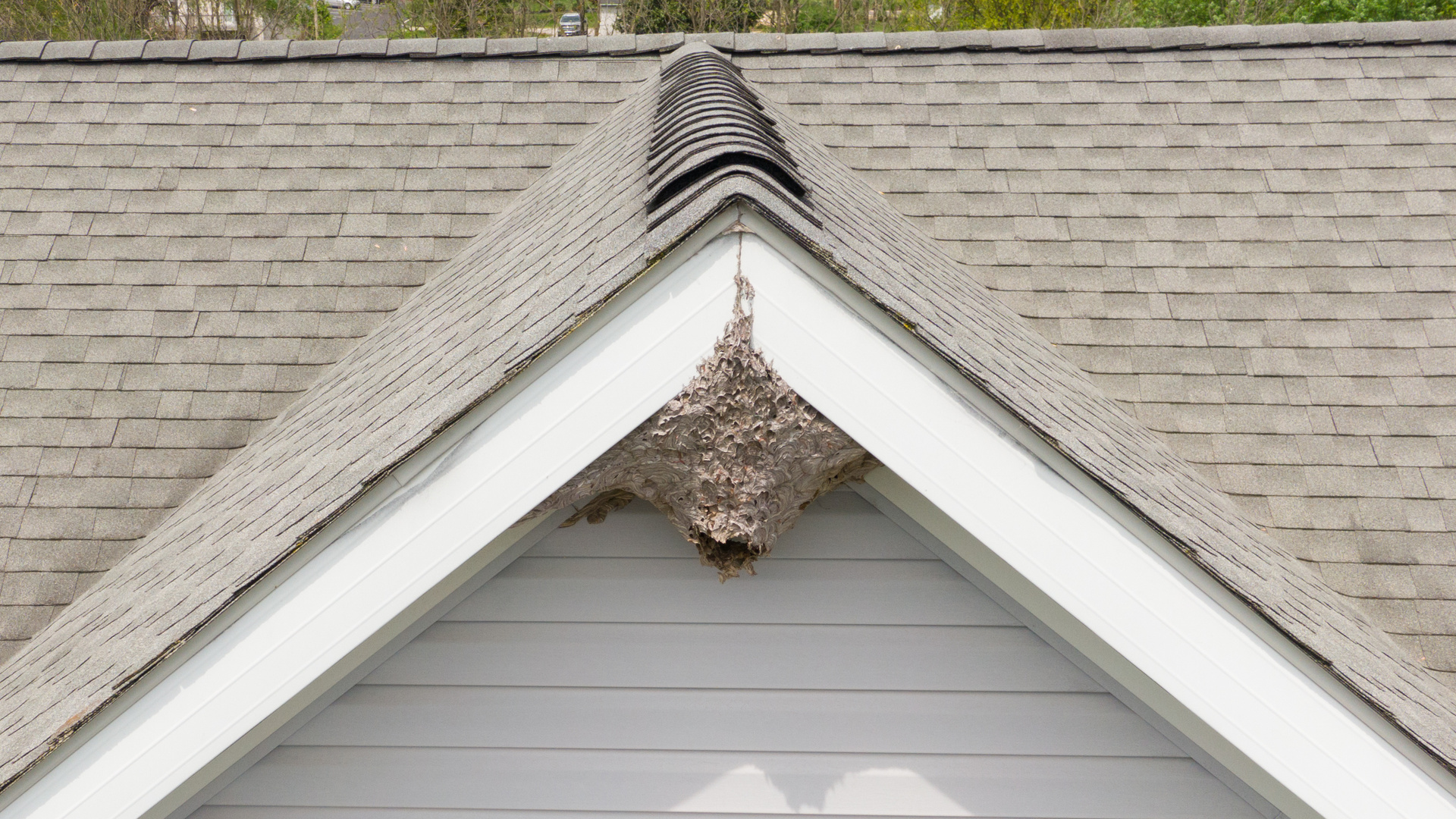

A papery gray nest the size of a fist showed up under the patio eave sometime between watering the plants on Tuesday and grilling out on Friday. Monsoon season is when we get the most calls about paper wasps in Tucson, and the timing tracks closely with the rain. That’s not a coincidence.
Humidity and a fresh supply of insects to hunt make July through September the busiest nest-building window of the year. What starts as a handful of open cells in June can carry dozens of active workers by August.
Left unchecked, that same nest can house well over a hundred wasps by the time monsoon season winds down in September.
Why Paper Wasps Nest During Monsoon
Paper wasps build with exactly what the name suggests: wood fiber chewed into a pulp and mixed with saliva until it hardens into the gray, papery material covering every cell.
Monsoon humidity keeps that pulp workable longer before it dries. That speeds up construction during the same months Tucson gets its heaviest rain. Construction that would normally take weeks in dry conditions moves noticeably faster once the rains start.
Not every papery structure under an eave turns out to be a paper wasp nest, either. A waxy comb instead of open cells usually points to honeybees instead. That’s a different call entirely since bees get handled very differently than wasps.
A few spots turn up again and again once monsoon nesting starts:
- Patio eaves and roof overhangs, sheltered from direct rain but still open to the air
- Door frames and window corners, especially ones that get less foot traffic
- Under deck railings or patio furniture that sits undisturbed for days at a time
- Inside vents, gaps, or hollow fence posts where the structure does most of the sheltering already
More rain also means more insects for adult wasps to hunt and feed to the larvae inside. A food source that’s suddenly abundant is reason enough for a colony to keep expanding a nest that was already a good size back in June.
Steady food nearby is exactly why these nests rarely stay small for long, and paper wasps aren’t the only thing this pattern brings out. Our guide to monsoon pests in Tucson covers the rest of what shows up during the same stretch of weather.
Should You Remove a Wasp Nest Yourself?
Paper wasps are calmer than yellow jackets most of the time. That’s part of why people underestimate them. That calm holds right up until the nest itself gets disturbed, and a shaken paper wasp nest responds as a unit, not as individuals. A single tap on a ladder or a spray can hissing from below is often all it takes to trigger that shift.
A few things make DIY removal riskier than it looks:
- Spraying from below means standing directly under a nest that’s about to release dozens of defensive wasps at once
- A ladder next to an active nest turns a wasp problem into a fall risk too
- Multiple stings in a short window matter more for anyone with an allergy, even a mild one
- Missing the nest at night, when wasps are calmest, often means facing a fully active colony instead
Wasp sting reactions vary enough between people that DIY removal is a bigger gamble than it looks for anyone who hasn’t been stung before and doesn’t know how their body reacts. A first sting with no prior reaction doesn’t guarantee the next one goes the same way.
When a Nest Becomes a Real Risk
A nest within a few feet of a door or walkway moves to the top of the list regardless of how calm the species normally is. So does one near a spot where kids play. Traffic alone is enough to trigger a defensive response once the colony feels crowded, and a doorway used a dozen times a day counts as constant traffic from a wasp’s perspective.
Size matters just as much. A paper wasp nest the size of a dinner plate by August didn’t get there overnight, and it’s already housing enough workers to make a defensive response a real problem instead of a minor one. Getting to that size takes weeks, not days.
This nest has likely been building since early monsoon season, growing a little more every week without anyone noticing until it was too big to ignore.
Professional Wasp Nest Removal
Removing an active paper wasp nest safely comes down to timing and equipment most homeowners don’t have on hand.
Treating the colony as a whole, not just the wasps visible on the surface, is what actually keeps a nest from reappearing in the same spot a few weeks later. That part gets missed constantly. What looks cleared out from the outside can still have workers and larvae rebuilding inside the structure within days.
A professional visit also means not guessing about how defensive a specific nest is going to be. Some paper wasp colonies barely react to being approached. Others respond immediately and in force. There’s no reliable way to know which one is on a given property without treating it as if it could go either way.
That uncertainty alone is reason enough to let someone experienced make the call instead of finding out the hard way. Our wasp removal is part of the broader residential pest control we handle across the Tucson area. A nest is rarely the only issue worth addressing on a property.
Book Wasp Nest Removal Today
Paper wasp activity builds through monsoon season and doesn’t slow down until temperatures start dropping in the fall, so a nest spotted in August still has weeks of growth ahead of it if nothing gets done.
If there’s an active nest on the property that’s past the point of watching and waiting, call GreenShield Pest Control at 520-393-3352. You can also reach out through our contact page and we’ll get someone out to handle it.
We proudly serve homes and businesses throughout Pima and Cochise counties, including:
- Benson
- Marana
- Tucson
- Sahuarita
- Oro Valley
- Vail
- Green Valley
- Sierra Vista